
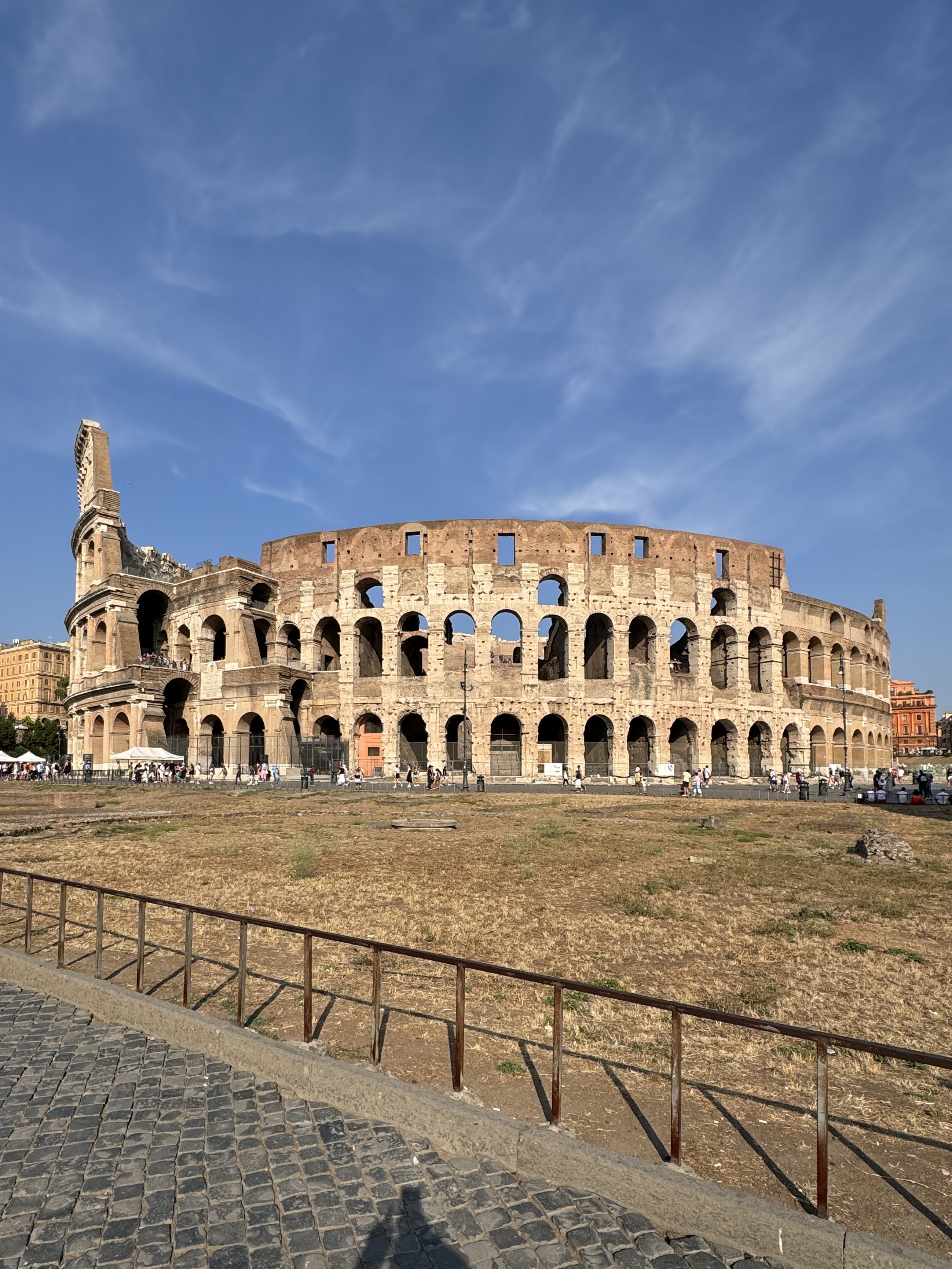
A highlight of my most recent trip to Rome was visiting the Colosseum. We sought to learn everything we could about this fascinating building. This is arguably one of the most recognized monuments in the world. It’s a place that trends on instagram stories and gets millions of likes on social media.

Its origins aren’t pretty, many were murdered there for public spectacle. Crowds gathered and cheered on at the loss of life all for entertainment. How horrific. I couldn’t help but draw some comparisons to society today, how some cheer for the loss of human life, at all phases.

With all that said, the monument, the building itself is still something to marvel at. I couldn’t help but wonder how (with the technology they had back then) the builders managed to build such a large structure that has withstood time. Think about it, the Colosseum has been around for almost 2,000 years! Its survived wars and earthquakes, plagues, good times and bad times- throughout a good chunk of history the Colosseum has been around. Throughout its own history, the Colosseum has been used for various purposes (aside the gory ones) and today of course is a place open to visitors.

This trip was focused on learning about the Christian martyrs that were killed in the Colosseum. I’d like to share one story that really stuck out. A story about a man who by his death helped fuel the fire for Rome/Romans to turn from its/their pagan ways to accepting and championing Christianity. He is known as St. Ignatius.
Ignatius was the Bishop of Antioch, he helped establish the early church – there is even a thought that he was a child during Jesus’ life and was present at one of his teachings. The story goes, during one of the many persecutions, christians were forced to deny their faith or face death. Ignatius refused to do so. At this point in his life, he was older and quite a well-known Christian, so he was sentenced to die in Rome.
On the journey to Rome he was escorted by a squad of soldiers. He referred to them as the “ten leopards,” and noted that their behavior “gets worse the better they are treated.” During this persecution, he wrote seven famous letters or epistles. In his writings Ignatius urged the Christian communities to remain faithful to their bishops, because this was essential to preventing heresy and division, and to keeping the house, the Church, standing strong. In his letter to the Christians of Rome, Ignatius begged them not to work for his release, for he deeply desired to die as a witness to the faith. WOW can you imagine, being happy to die for your beliefs? What faith!
When Ignatius arrived in Rome around the year 107, he was thrown to the lions in the Colosseum. Church tradition states that the lions wouldn’t touch him and so Ignatius had to poke the lions to act. When the lion ultimately acted and killed him, its said that he devoured everything but his heart. It is said that Ignatius’ last words before the lions tore him to pieces was “Allow me to become food for the wild beasts, through whose means it will be granted me to reach God.”
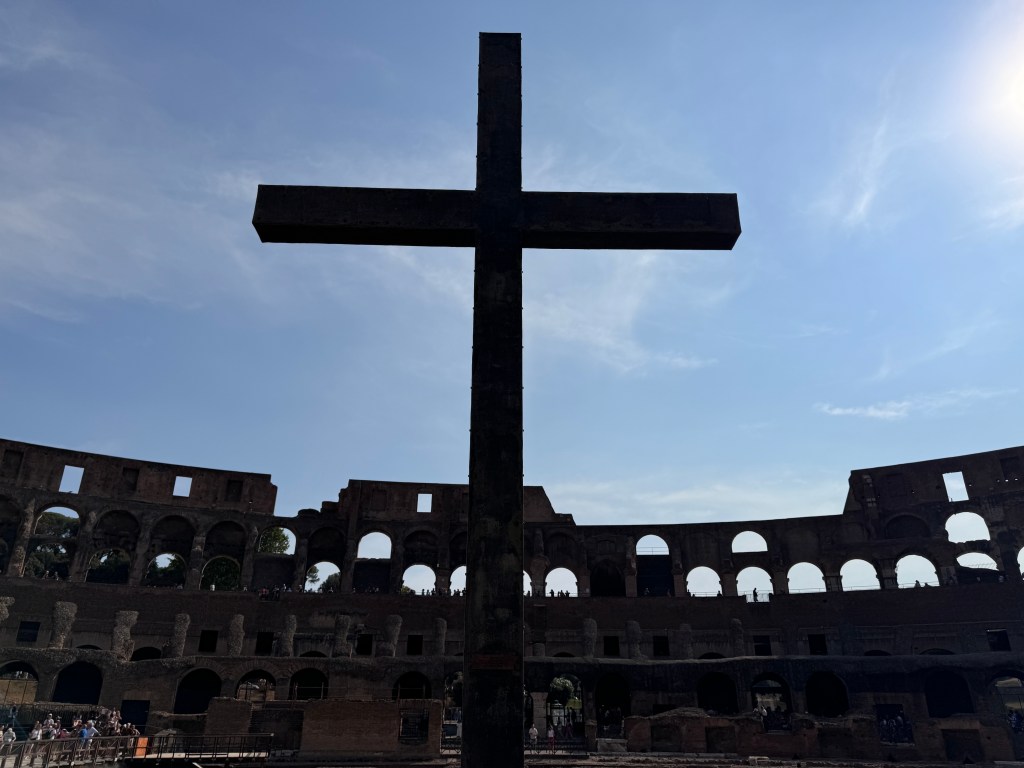
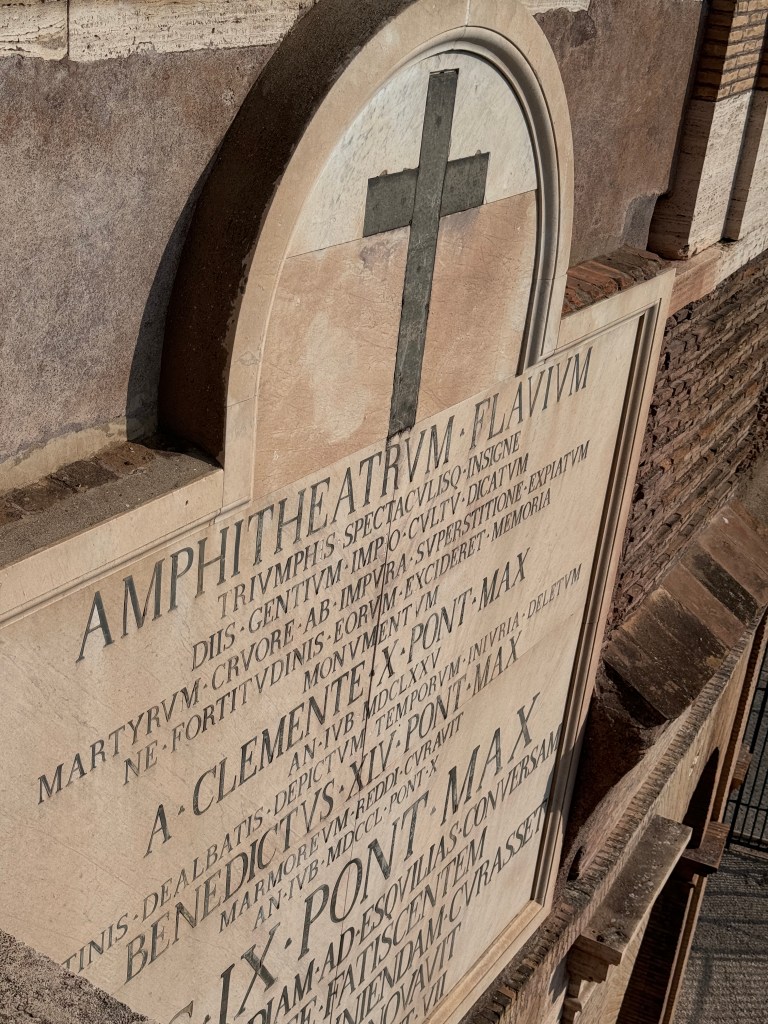
There is a section in the Colosseum to remember the Christian martyrs.
Cheers & Thanks for reading!

 LaCatanese